
Durham County Busted Mugshots
A busted mugshot in Durham County begins with an arrest. Police bring someone in, and a booking follows. The Durham Police Department, the Durham County Sheriff's Office, and other agencies all make arrests here. Most adults end up at the Durham County Detention Facility, which serves as the county's main booking and holding site. During intake, staff log the person's name, the charges, any bond amount, dates of confinement, and a docket number. A photo is often taken too.
Why doesn't one search answer everything? Because custody records live in different hands. The arresting agency keeps the incident report. The sheriff's office runs the current inmate table. The courts hold what happens to the case afterward. If the person moved into state custody, the North Carolina Department of Adult Correction locator is the better tool. Someone released quickly may drop off the current roster, yet the booking record itself can still be requested from the agency that made the arrest.
Durham Busted Booking Fields
The DCSO Inmate Population Search shows a useful slice of a booking. Only a slice, though. It groups charges under a displayed name and lists custody and court-related fields. What it won't give you is a public booking photo. It also can't promise that every internal field makes it online. So treat the table as a snapshot. Keep the exact wording and date you see, since rows change.
| Field | What it shows |
|---|---|
| Name | Last, first, and middle-name formatting used by the DCSO list. A name alone is not identity proof. |
| Date confined | The custody-entry date shown by the roster, which may differ from the incident date. |
| Date charged | The charge date carried in the jail record. Keep it separate from the confinement date. |
| Date released | Shown when a release has occurred. A released person can remain visible for a time. |
| Statute description | The charge wording carried by the roster, not a final court disposition. |
| Bond type and amount | The bond fields displayed by DCSO. A judicial order can change release terms. |
| Court docket | The number used to connect the booking to NC eCourts and the Durham Clerk. |
| Days in jail/charge | A roster calculation or label, not a sentence length or proof of guilt. |
| Booking photo | No photo appeared in the checked public table. Ask DCSO for an existing image. |
Some fields rarely surface in the public table. A booking number, arresting officer, incident number, court date, release reason, and physical descriptors are not dedicated columns there. They may sit in an agency, detention, or court file instead. When you request a record, be specific. Name the person, the date range, the arresting agency, and the docket if you know it. That lets the Records Division find an existing file rather than build something new.
- Booking
- Intake and identification after an arrest or commitment.
- Bond
- A court-set condition or amount tied to release before the case ends.
- Disposition
- The court’s later result, such as dismissal, plea, acquittal, or conviction.
- Expungement
- A legal process that can remove or restrict eligible records under North Carolina law.
Get Durham Booking Records
No photo on the roster? The entry may have aged out. Go straight to the source instead: the Durham County Sheriff's Office Records Division or its Public Information Office. The Records Division sits on the first floor of the Durham County courthouse at 510 South Dillard Street. Hours run Monday through Friday, 8:30 a.m. to 5 p.m. The listed phone numbers are (919) 560-0899 and (919) 560-0898. Email works too, at PIO@DurhamSheriff.org. The DCSO records page posts a $3 cash fee for a report copy, or $6.09 by card. No booking-photo fee or photo turnaround time is listed.
- Name the person, arrest or confinement date range, arresting agency, and court docket if known.
- Ask for the existing booking or intake record as one item and an existing booking photograph as a separate item.
- Request an electronic copy if available and ask the agency to identify any exemption, redaction, fee, or missing record.
- Ask for an estimate of cost and timing before production. DCSO does not promise a standard photo fee or response time.
- Keep the response with the source date. If the arrest was by DPD, also consider a Durham Police public-records request.
North Carolina law doesn't force the sheriff to build an online photo archive. A record can be public in one form while parts of it stay withheld or redacted. Ask for an existing record. Don't ask for a new compilation. The county's general public-records request page notes that sheriff requests should go through the sheriff's own Public Information Office route.
Retention and web display run on separate clocks. The State Archives schedule allows one year for arrest-processing tracking records. Stand-alone arrest reports get five years. Solved felony case files are kept twenty, and inmate incarceration records run three years after release or transfer. Misdemeanor rules vary by classification. There's no schedule line called "booking photograph," so DCSO must first identify the record series before quoting a retention period. A roster row can vanish while the case file survives. Or it can linger after release until the list refreshes.
North Carolina Mugshot Law
Public records in North Carolina start with North Carolina General Statutes Chapter 132. The law takes a broad view of what counts as public. Still, exemptions apply, and agencies may charge reasonable reproduction costs. One key provision, G.S. 132-1.4, shields most criminal-investigation records. But it spells out arrest details that stay open: name, sex, age, address, the alleged violation, and the circumstances of the arrest. Returned warrants, indictments, and criminal summonses are public unless a judge seals them. Even so, no statute obliges the Durham County Sheriff's Office to post booking photos online.
G.S. 15A-502 lets officers photograph and fingerprint anyone charged with a felony or misdemeanor for law-enforcement identification records. That authority stops at the station. No enacted state law forces Durham to publish mugshots on the web. None bans sites from charging for removal. House Bills 778 and 446 were proposed measures. Proposals are not statutes.
Juvenile court records are generally confidential even when a hearing is open. Sealed and expunged matters carry their own limits. The North Carolina expunction page lays out how eligibility, waiting periods, fees, and exceptions differ from case to case. The official form index includes paths for dismissals and not-guilty verdicts. For a specific case, ask the Durham Clerk or a North Carolina lawyer rather than assuming every booking qualifies.
When a court order or identity correction is in hand, send it to the arresting agency and to each secondary site. Use each site's free process. Busted Newspaper's removal form asks for a post URL and supporting documents. It typically resolves requests in 5 to 10 days. Mugshots.com lays out free review with a window of up to ten business days in its record-maintenance policy. RecentlyBooked offers a free correction policy. Arrests.org shows a removal route on individual records. No service can scrub every copy of an image from the internet. Anyone insisting that money is the only path to a correction deserves skepticism.
Find Durham Arrest Records
The right search tool depends on custody status. Someone booked hours ago may sit in the DCSO current table, while a person released the same day can drop off the list even though the arrest record lives on. A sentence into state custody moves the person to the NCDAC search. Federal or immigration detainees belong in a federal locator. One empty result never rules out an arrest.
- Open the DCSO Inmate Population Search and record its Last Updated time.
- Search the last name first, then compare first and middle names, confinement date, charge wording, bond, docket, and release date.
- For a Durham Police arrest, check the P2C Event Search and Daily Bulletins described by DPD. Their entries can lag several days after review.
- Copy the docket into NC eCourts and read events, hearings, and disposition entries.
- If the photo or report is missing, ask DCSO or the arresting agency for the existing record and ask about cost and timing.
Pair the arresting agency with the county holding the person. Adults arrested by Durham police normally pass from DPD to the Durham County Detention Facility. Chapel Hill and Raleigh present different routing puzzles. Their routine bookings go through Orange and Wake counties. State, university, federal, and other agencies can follow entirely different paths. For someone wanted but not yet booked, the Most Wanted Fugitives page is a separate resource.
Where Durham Busted Mugshots Appear
Go to official sources before any secondary index. Each channel answers a different question, and not all of them include a photo. The DCSO table offers the clearest current view of county custody. DPD reports cover city arrests and incidents. Court and DOC records track what happens after the booking.
| Channel | Photo? | Official? | How to use it |
|---|---|---|---|
| DCSO roster | No photo in checked view | Yes | Current or very recent county custody; note timestamp and fields. |
| DPD P2C and reports | Event dependent | Yes | Durham city adult arrest and incident path; allow for review lag. |
| DCSO news | Release dependent | Yes | Selected arrest or wanted announcements, not a complete feed. |
| NCDAC search | Not promised | Yes | State prisoners, probationers, and parolees, not ordinary county pretrial custody. |
| NC eCourts | No booking gallery | Yes | Case events and disposition; portal results are not certified copies. |
| DCSO records request | Existing photo may be requested | Yes | Direct fallback for a record not shown online. |
| Local news | Article dependent | No | WRAL, Herald-Sun, News & Observer, CBS 17, and ABC11 publish selected stories. |
| Secondary indexes | Often copied | No | Use only as leads, then verify source county, date, and court result. |
News outlets handle Durham differently. The WRAL mugshots landing page states that its Durham coverage relies on sheriff-provided data and photos when published. The Durham Herald-Sun, News & Observer, CBS 17, and ABC11 take a story-based approach instead. Commercial archives add another layer. Busted Newspaper keeps a Durham County page. Mugshots.com maintains a Durham County archive, and Arrests.org organizes Durham entries by year and month. Treat all of these as unofficial. They can be incomplete or stale, and none should be mistaken for the official Durham mugshot record. Mugshots.zone has no Durham local section. RecentlyBooked's state index omits the county.
Match any third-party image against the official agency and court record. The photo may come from an old booking, a different custody county, or a file that changed after publication. No gallery is reproduced here. What matters is source matching: agency, date, charge wording, docket, custody status, and disposition.
Busted and Booked in Durham
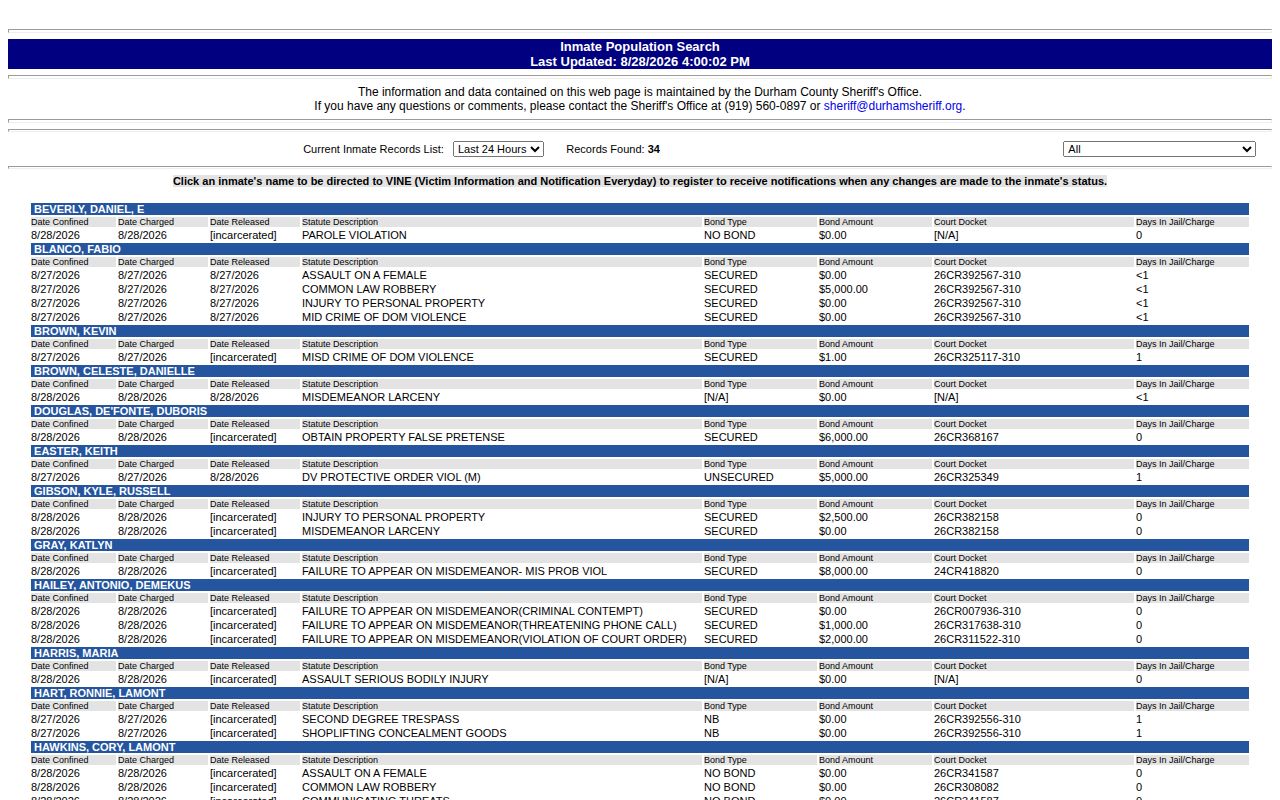
The county's main custody tool is the DCSO Inmate Population Search. It prints a Last Updated stamp at the top. Each row groups a person's charges and shows the date confined, the date charged, and the date released when that applies. Bond type, bond amount, the statute description, the court docket, and days in jail per charge fill out the rest. Rows stay current, but the sheriff's office does not promise an hourly cadence or say how long any entry stays online.
Clicking a name leads to VINE, a notification service. VINE can send word of a custody change, such as a release or transfer, when it holds the record. It is not a booking-photo database. It is not a court-disposition alert either. A federal detainer label, if one shows up, is just a roster field. Read it as written.
Booking photos are the roster's quirk. None appeared in the public view. A reader who wants an image should ask DCSO whether a booking photograph exists and which record series holds it. The Records Division, the arresting agency, or an official release may identify the right file. Clicking a name does not open a photo.
For a careful roster check, note the time, try spelling variants, compare the confined and charged dates, and copy the docket. A row is one custody snapshot. A missing name can mean release, transfer, another spelling, a juvenile or protected case, or booking in another county. The DCSO roster is authoritative for its own snapshot, not for every arrest record around. Why does a release date matter? A row can linger after release, since the table keeps very recent releases visible. That says nothing about why someone got out, and no fixed web-retention window exists. Check DCSO or the court when the difference affects a decision.
For live fields and the latest update stamp, go straight to the official DCSO roster. What you see there is the record itself, not a copy of it.
Busted Last Night? Check the Dates
No verified public DCSO feed shows last night's Durham bookings. There is no 24-hour, 48-hour, 72-hour, or weekly mugshot list. The timestamped roster comes closest. It offers a same-day or next-day view, including people confined the day before plus recent releases. Its exact visible window is unstated. So trust the dates on the screen. Do not treat the table as a guaranteed archive.
City arrests add context through DPD's P2C Event Search and Daily Bulletins. DPD warns that entries may take several days to appear after entry and review. Its crime-statistics page links weekly reports, open data, and a weekly gun-related-arrest archive. Those themed PDFs can hold an arrest date, charge headings, arrest mode, and mugshot-style images. Still, they are not a full jail roster.
DCSO news releases and Durham CrimeStoppers are announcement channels, not booking logs. The CrimeStoppers suspects page covers wanted persons and identification requests. Local papers and TV stations publish when a story warrants it. When a search comes up empty, fall back on DCSO Records, DPD Records, and the court portal in that order.
Busted to NCDAC Search
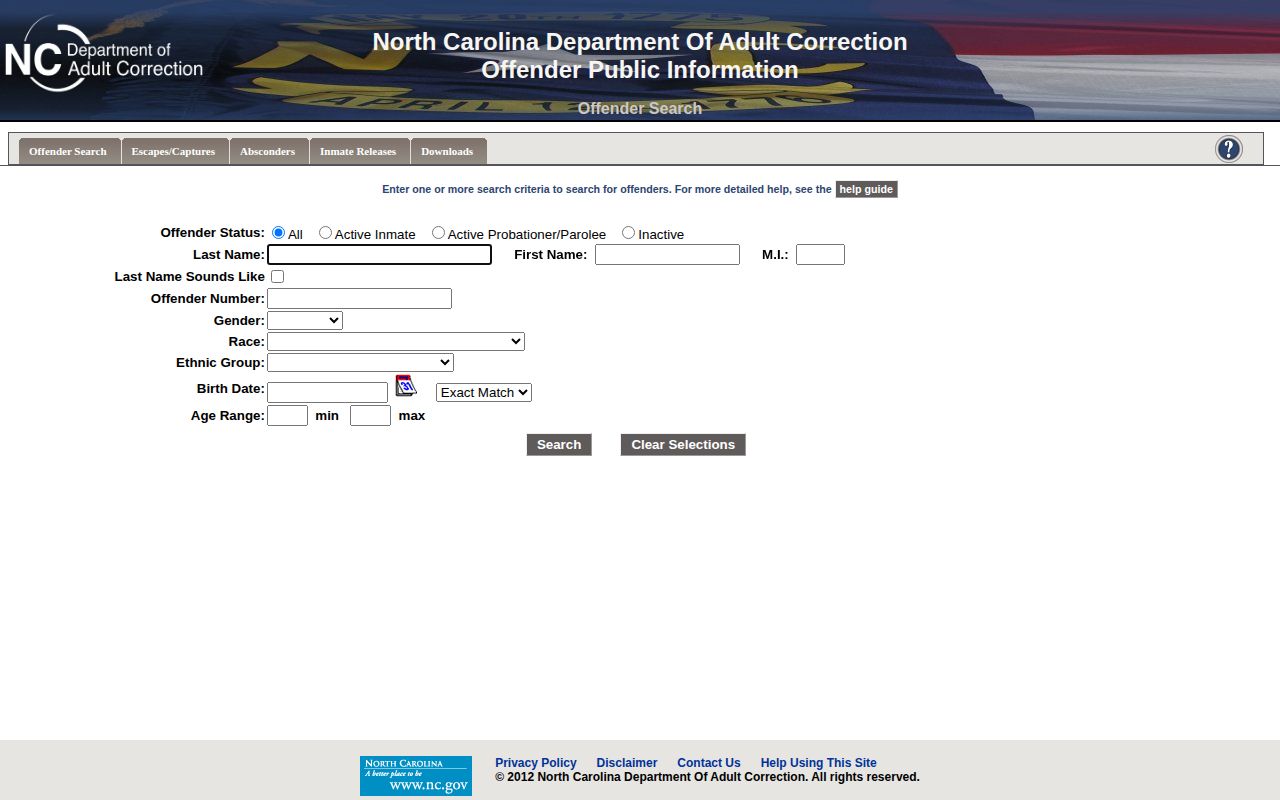
The North Carolina Department of Adult Correction offender search is a different animal. It covers state prisoners, probationers, and paroleers. Public guidance says it searches by name or offender ID, reaching records back to 1972, current and historical alike. That is state custody. It is not the Durham County Detention Facility holding cell. Someone booked and quickly released may never appear here.
Search an exact or near-exact name, or use the NCDAC number when you have it. Compare the permitted identity fields before tying a state record to a county booking. The locator works best as a status and identity tool. A photo is not a standard result, so do not count on it as an image source. Need a state image or file? Use the NCDAC public-records request route. Ask about the public portion, exemptions, cost, and timing.
The two systems answer different questions. A county roster says whether DCSO shows current or recent county custody. NCDAC says whether a person sits in state prison or under state supervision. Someone can show up in one, in both at different times, or in neither.
The NCDAC search instructions explain the state-level scope of the locator.
Booked, Released, or Sentenced?
One person can pass through several record systems. Search by custody state, not by city name. A current jail row, an old booking record, a court case, and a state offender entry can each describe a different point in time for the same individual.
| State | Best source | What it means |
|---|---|---|
| Just booked or in Durham custody | DCSO current roster and arresting agency | Current or very recent county custody fields. No photo in the checked roster view. |
| Released from Durham custody | DCSO Records, arresting agency, roster if still visible | A release date may remain online. The disappearance of a name does not explain the release. |
| Durham city adult arrest | DPD P2C and DPD Records, plus DCSO | Municipal incident data may lag the county custody table. |
| Case disposed | NC eCourts and Durham Clerk | Later hearings and disposition. Portal results are not certified copies. |
| State prison, probation, or parole | NCDAC offender locator | State custody or supervision, not ordinary county pretrial detention. |
| Federal custody | BOP, USMS, or federal court | Federal status. Public booking photos are not promised. |
| Immigration custody | ICE Online Detainee Locator | ICE custody search. A person may not appear at once and it is not a photo archive. |
Federal custody works differently. The BOP locator covers federal inmates from 1982 forward, searched by register number or name fields. Photos are another matter. The U.S. Marshals Service guidance says it does not release public photographs or histories of federal prisoners. The ICE locator takes an A-number or an exact name with biographical fields, and its help line is (888) 351-4024. None of these stands in for the Durham court file.
After a Durham County Booking
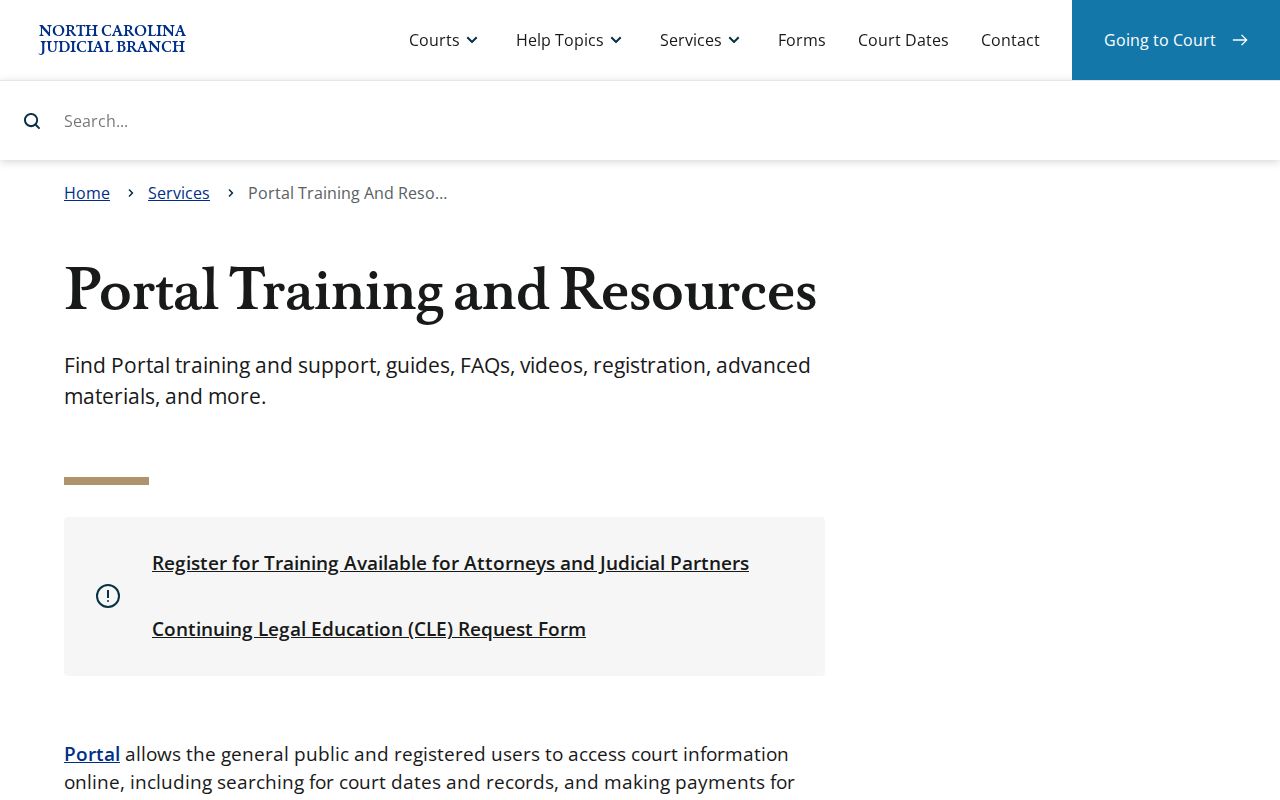
A jail roster answers one question: who is in custody right now. The court docket answers the rest. North Carolina's eCourts Portal returns case summaries, parties, hearings, events, dispositions, and financial details, so search the DCSO docket exactly, then confirm the defendant, county, and case type before trusting a match. Phone help exists too. The Durham Clerk of Superior Court criminal and traffic page lists (919) 808-3002 and notes that a name inquiry covers charges filed in Durham County only, leaving state, federal, and out-of-county records to other sources.
- Copy the docket from the DCSO table without changing its letters, numbers, or punctuation.
- Search the docket or person in the eCourts Portal and confirm Durham County.
- Read hearing and disposition entries with their dates. Do not treat the booked charge as the final result.
- Ask the Durham Clerk at the criminal and traffic office for a certified copy or a record not found online.
Court language can blur together. An arraignment, sometimes called a first appearance, is simply an early hearing. A disposition comes later. It can be a dismissal, a reduced charge, a plea, an acquittal, a conviction, or another form of closure. Where the person sits while all this unfolds varies. Release before the outcome is common, but some stay in pretrial custody, transfer elsewhere, or eventually enter state custody. Separate rules govern juvenile files, sealed and expunged records, and involuntary-hospitalization records, all of which carry special limits.
The North Carolina Judicial Branch portal resources describe the public case-search tools.
Durham Busted Alerts
The DCSO App, listed as "Durham County SO, NC," works as an official channel for announcements and tips. The county's launch notice points to public-safety communications, emergency information, tips, and reports. Its Google Play listing describes much the same. Neither promises inmate lookup or booking photographs, so treat the app as a community channel rather than a mirror of the DCSO roster.
VINE, linked from names in the DCSO roster, sends custody-status notifications where a record exists. DCSO news releases and social feeds sometimes carry arrest or wanted announcements. The confidential tip route lists (919) 560-7151 and crimetip@durhamsheriff.org, though nobody monitors that line around the clock. Emergencies belong with 911 or (919) 560-0900. SmartInmate/GTL handles visitation scheduling, not booking-photo searches.
Sorting the tools helps. DCSO owns the current custody table, VINE sends custody-change notices, the app handles public-safety communication, DCSO news posts selected releases, and eCourts tracks hearings and dispositions. One caution applies. An alert that someone was released, transferred, or marked arrested says nothing about the final court outcome.
Durham Busted Archives
Old records scatter rather than gather in one mugshot archive. The North Carolina State Archives local-government page explains that agencies follow approved schedules under the Public Records Act. The County Sheriff's Office schedule lists separate series for arrest processing, arrest reports, felony and misdemeanor case histories, inmate incarceration records, and inmate lists. Notice what is missing. No separate booking-photo line appears anywhere on that schedule.
Chasing an older Durham record starts with basics. Gather the agency, the approximate date, the person, any docket or arrest number, and the record type you want. Ask DCSO Records or the Durham Clerk whether the file still lives there. If not, search the State Archives catalog and the county box lists. Keep expectations modest. The Archives does not hold every sheriff file. A catalog hit does not prove that a particular photograph made the trip.
A page vanishing from the web is not the same as a record being destroyed. The roster can drop a row while the underlying file survives. Third-party indexes often keep stale copies long after the official source changes. Court orders and corrections should go to the source and to any site that copied it. When a source page is gone but an old search result lingers, use the search engine's outdated-content request. No office can promise instant removal from every copy.
Numbers give the detention facility some scale. The DCSO 2024 annual report counts 5,137 total arrestees processed at the jail for its reported detention-services period. That is a throughput measure, not a current roster or mugshot count. The facility opened in summer 1996 with 576 single cells, added 160 bunk beds later, and is described as having capacity of 736. It handles intake and release for a multi-agency county system. That is why the arresting city and the custodial jail must be checked separately.
Durham County Cities
The city map draws on North Carolina's July 2024 municipal population distribution for the county portion of each municipality. Treat it as a search-routing aid. It makes no claim that every city-name arrest belongs in DCSO custody. Durham city arrests ordinarily lead to DPD and the Durham County Detention Facility. Chapel Hill and Raleigh cross county lines. Their ordinary bookings generally land in the Orange and Wake county systems instead.
- Durham Busted Mugshots: DPD’s P2C, Daily Bulletins, weekly reports, and the DCSO custody roster.
- Chapel Hill Busted Mugshots: CHPD reports, Orange County custody routing, and the cross-county boundary.
- Raleigh Busted Mugshots: RPD records, Wake County custody, and the absence of a verified daily RPD photo feed.
Match each question to its office. The city police department holds the arrest report, the correct county answers for custody, and the county of filing decides the court disposition. A municipal population share inside Durham County does not make a Chapel Hill or Raleigh case a Durham jail booking. Other agencies can take other paths.